
Get to Know Us

A transdisciplinary research-practice collaboration, the MIT Systems Awareness Lab is devoted to the study of systems change. Established in 2022 in response to the global poly-crisis–from the climate emergency to the youth mental health crisis–we seek to move beyond mechanistic “fixing” of issues towards a living systems methodology that reflects the interdependence, adaptability, and relationality of complex living systems.

Our Mission

The MIT Systems Awareness Lab brings together researchers, educators, policymakers, and practitioners dedicated to the study of transformative, self-reinforcing, and continuous systems change.

Our mission is to develop, investigate, and grow the conditions for greater human and planetary flourishing in response to the global poly-crisis, including the climate emergency, social inequities, and the youth mental health crisis.

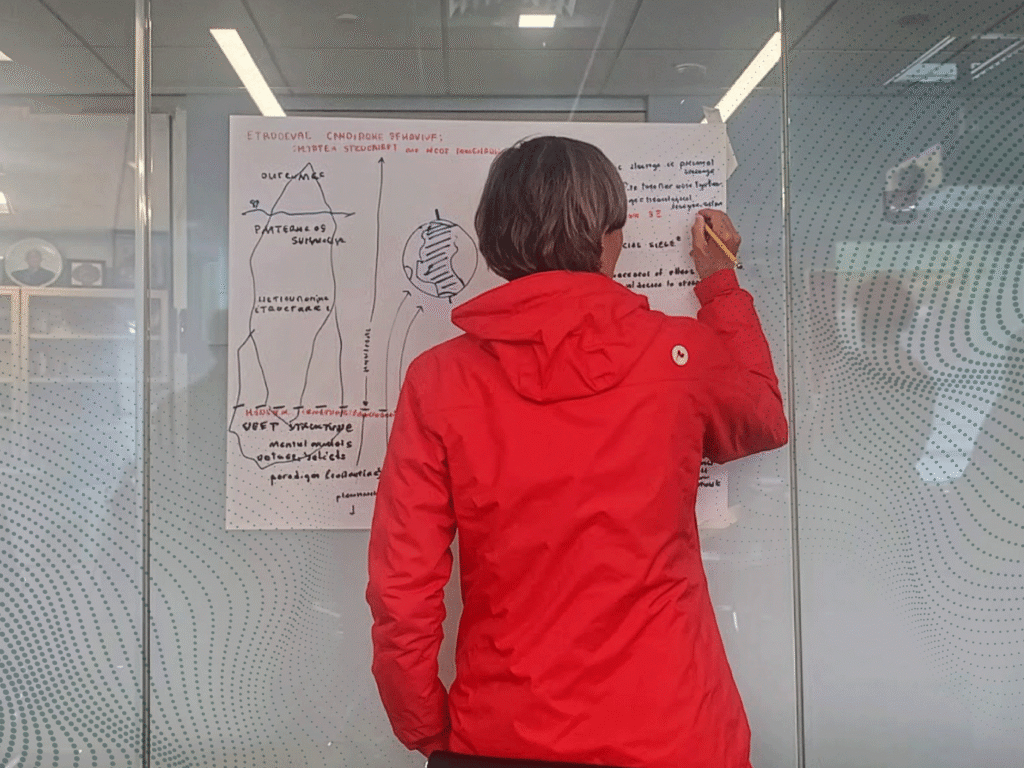
We believe meaningful change only occurs when we address both tangible artifacts, such as formal structures and policies, and intangible mental models, including the habits of thought, feeling, and action that shape how people engage with one another across systems of all levels.

Theory: Living Systems Change

To understand our methodology, it is essential to recognize the shift from a mechanistic to a living systems approach to change:

Mechanistic Change

Traditional theories of change often oversimplify complexity by focusing on predetermined outcomes, linear implementation, and replicable "copy and paste" solutions. These models prioritize inputs and outputs, parts and nodes, often resulting in "one and done" initiatives that fail to sustain themselves.

Living Systems Change

Our work draws on biological life, favoring organic growth over scale, and ongoing relationships over fixed outcomes.
We prioritize relationships, social fields, and ecosystems in studying systems, emphasizing context-sensitive adaptation and community-led change.

Core Research Focus Areas

Systems Awareness 

Systems awareness is our ability to sense and understand the complexity of interconnected elements within a given system and discern our ability to enact change within that interdependence. 

Our research studies how leaders of all ages and levels grow their capacities in systems awareness. In particular, we study practitioners’ use and adaptation of the Compassionate Systems Framework, developed by Dr. Mette Boell and Dr. Peter Senge of the Center for Systems Awareness.

Generative Social Fields

The core of our research focuses on Generative Social Fields, which are the relational spaces we shape with others. These fields are marked by how people think and work together to shape interpersonal environments that foster collaboration, flourishing, and well-being.

By studying these fields, we identify how to create “containers” where individuals feel seen, safe, and supported, allowing them to connect and innovate and move beyond degenerative cycles like burnout, stress, and division.

Research Methodology:
Partnering for Living Systems Change

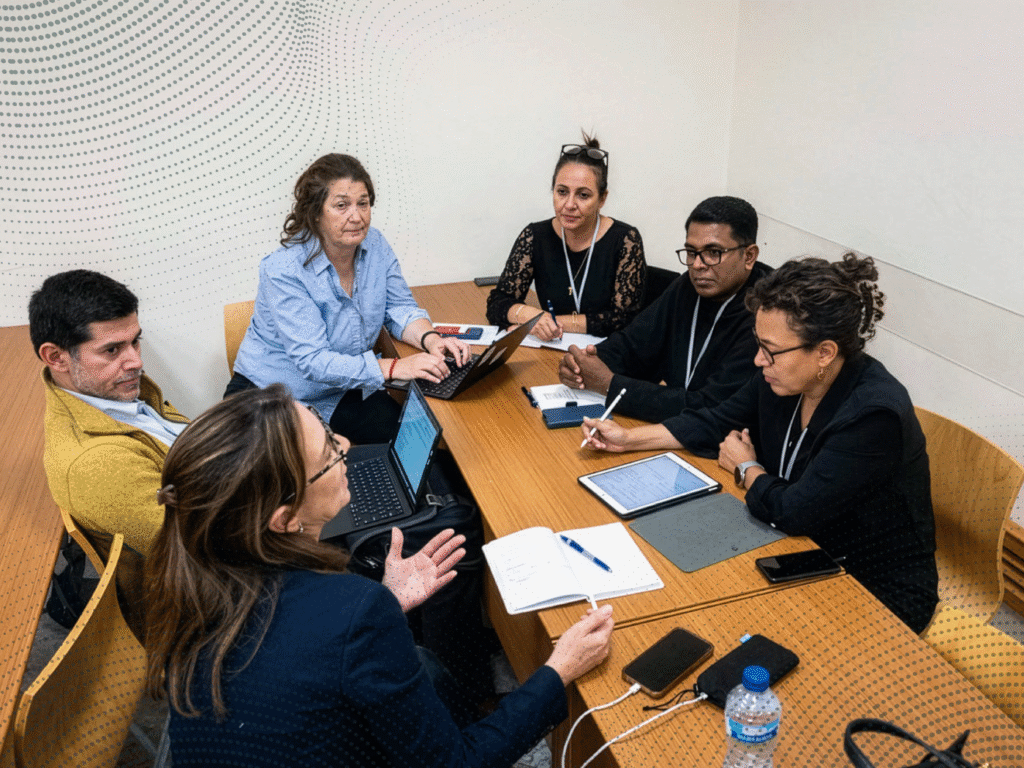
Our work is grounded in the belief that meaningful study and sustainable change require a deep partnership between researchers and practitioners. We do not just observe from a distance; we “walk alongside” communities–including schools, universities, nonprofits, and government ministries–as they navigate their own change journeys. We weave together transdisciplinary research methods to document and understand how change processes emerge, grow, and evolve over time. By partnering with change leaders and organizations across the globe, we study the “outer” tangible structures and “inner” intangible mental models that shape their systems and support them in exploring pathways toward meaningful and sustainable change. This collaborative approach allows us to iteratively refine our methodologies based on real-world learning and the lived experiences of those in the field.

Meet Our Team

We’re a group of deeply committed individuals interested in meaningful systemic change. Learn more about us and how we approach our research.

Eric Klopfer

Faculty Director

Mette Miriam Böll

Research Affiliate

Peter Senge

Co-Director

Lana Cook

Associate Director

Lukas Herrmann

Research Affiliate

Affiliates

Madiha Malikzada

Research Assistant

Huda Alamassi

Communications and Program Support Assistant

Fiorella Massa

Graphic Designer

Rodrigo Vico

Website Developer

Past Affiliates

Tibyan Bilal

Web Development Intern

Karim Makie

Full Stack Developer Intern

Dan Roy

Research Scientist, MIT Scheller Teacher Education Program / Education Arcade

Ira Fay

Learning Game Designer, MIT Scheller Teacher Education Program / Education Arcade

Mohammed Elfadil

Qualitative Research Intern

Dr. Rana Dajani

Research Affiliate

Yevheniia Rudenko

Full Stack Developer and Project Management Intern

Supporters

We thank our supporters who made this research possible:

Our partners